Friday, 13 September 2013

05 Rare Tea

Recently in Vancouver I stopped in to a relatively new tea shop called O5 Rare Tea Bar.  It is truly a unique and amazing shop.  Pedro, the tea shop owner has such a passion for tea.  You feel it when he speaks about tea, and his business of direct trade with specific farmers that he has developed long standing relationships with.

When you enter off the street into his shop you are in quite a small space, with one long counter that has about 3 teas brewing stations set-up.  Upon sitting down a person comes out right away and greets you and serves you a sample of one of their house made elixirs.  Today it was a rootbeer elixir that was to die for!!  We then perused the menu and the server asked what types of tea I was interested in.  I mentioned that I preferred greens and oolongs and she made some suggestions.  I ended up trying the Balhyocha Noeul oolong.  A dark longer oxidized tea.

To start with they pulled out a chest of the tea
from behind the counter to smell and view the tea, then they took some out and put in in the brewing pot.  They brewed the tea similar to Gungfu Cha with more leaves and shorter infusions.  They re-steeped the tea as many times as you wanted them to.

I had the oolong.  The oolong was a long oxidized tea, and the dry leaves smelled of cocoa.  It tasted like cocoa as well, with hints of fig and plum.  It was the most exquisite oolong I have ever tasted to date!


 and Brian ordered the ginger beer elixir.  It was cold, and it was bubbly.  It was also quite spicy.  They served it with candied ginger that had been sitting in honey.  Together they were to die for!!


Soon after we were lucky enough that the owner Pedro was in the shop and he came over to chat with us.  He talked about the tea, that it was from South Korea, and how he meets the farmers and sets up deals with them.  He had a slide show from his tea travels where he would select pictures from to show you and further enhance the experience.  He also entertained us with stories about Pu-Ehr, and showing us the differences between and handmade and machine made cakes.  I definitely recommend this place to anyone searching out a unique experience - whether it be tea related, or 'just something different'.  Here is the link to his website.


O5 Rare Tea Bar - It's about obsession with Origin.  5 natural elements that make-up terror:  Earth, Fire, Water, Wind and Void.

I ended up purchasing the Balhyocha Noeul Oolong from South Korea.  I can't wait to get home and make it!!

Sunday, 8 September 2013

Africa!!

Africa conjures up images of the Serengeti with lions, zebras, elephants etc.  But there is also a significant amount of tea that is grown on the African continent as well.  Some of the bigger tea producing areas include: Kenya, Malawi, Uganda and Tanzania, but tea is also cultivated in Cameroon, Mozambique, Ethiopia, D.R. Congo, Burundi, Rwanda and Mauritius.

Historically and still currently, Africa produces mainly tea for the tea bag industry, and for tea blends, so they use the CTC (cut tear curl) method of producing tea.  This results in very small fine granules of tea, that produces a typically darker and stronger tea.  The tea in Africa is generally know for its full body and strong and robust liquor quality that is ideal for blending.

Since the rise in speciality tea, they have begun to produce more Orthodox teas as well as some very good white and green teas as well.

Tea was first brought into South Africa for experimenting with in 1850.  In 1877 the Assamica variety was successfully planted and grown for commercial purposes.

Below is a summary of the teas that were tasted in the Tea 102 Tea Sommelier Course - Week 5.  All the teas from Africa that we tasted were black teas.

Malawi:

Tea has been grown in Malawi since 1890.  The first area to be planted was Mulanji, and then subsequently Thyolo.  Malawi is located in Central Africa and grows approx 3% of the total world production of tea.  The tea is sold primarily thru the Blantyre auction centre, and most of this tea is exported to the UK and South Africa. Some other large importers of Malawi tea includes Germany, Netherlands, USA, Pakistan and Canada.  The tea is sold primarily thruThe tea season runs from November to May - which is similar to the rainy season.

We tasted a CTC from Malawi.
Malawi Black

As you can see it has a very dark liquor.  The aroma was of a sweet floral honey type.  However when I drank it, I found it to be a bit on the bitter side at the back of my tongue.


Kenya:

Kenya has been 'settled' by a variety of groups.  First by the North Africans, and then by the Arabs and Persians.  The Portuguese, as one of the first Europeans in the tea trade arrived on the scene as well. By 1730 the Omani Arabs had managed to send the Portuguese back to Europe, but it wasn't long ( in the 1880's) before the British and Germans arrived to expel the Arabs.  In 1895 The British proclaimed Kenya as part of their 'group', and by 1963 Kenya was finally independent.

Kenya is one of the most successful agriculture regions in Africa.  Tea was planted in about 1925 by the British Settlers.  By 1933 the Kenyan Tea Growers Association offered a way to organize and protect the industry.  This was followed up by the Kenyan Tea Development Authority in 1964.  CTC is the primary product, with Orthodox becoming more popular as of late.  Kenya is now the largest tea producer in Africa.  The majority of the teas is sold thru Auctions, similar to Malawi.


Kenya Black Orthodox
The Kenya Orthodox tea we tasted is lighter in colour than the Malawi.  The dry leave smells of sweet hay which translates into a nice floral honey aroma to the liquor and a fairly smooth, but full bodied sweet tea.


Kenya Black CTC


Tanzania Black


The Kenya CTC was similar to the Orthodox, except that it had more body and a touch less smooth going down.
Uganda Black


Tanzania:


The basic history of settlement is fairly similar to Kenya with the Arabs, the Portuguese, and the British and Germans.  In 1902 the first German settlers planted tea, and commercial production began in 1926.  By 1960 Tanzania was yielding approx 3,700 tons of tea.  Tea is the fifth largest export crop for the country, and they export  over 75% of their tea for foreign markets.  In the 1980's the industry experienced some ill effects of poor economic maintenance, and some major reforms were implemented in the early 1990's.

The tea tastings from Tanzania and Uganda were fairly similar. Both were fairly dark in colour but not as dark as Malawi tea.  Both teas were not very distinctive, and were fairly mellow, not really too sweet and also not bitter.  They are both primarily used in blending.

Overall I liked the Kenyan tea the best.  I guess it's fairly obvious why this tea is the most know growing region in Africa.


Friday, 6 September 2013

Human + Tea = Humanitea

Nepali Tea Traders is taking tea to a higher level.


In a few of my previous posts I've touched on tea and how tea has evolved into more than just a beverage.  Tea is community, it builds relationships between people, cultures, and faiths.  Tea builds bridges, even where there are deep chasms.

Community:
Take for instance my post Tea Builds Relationships, where I discuss my relationship with my boyfriends daughter and how tea has cultivated a common ground between us.  We have sat down and drank tea together and evaluated the teas colour, aroma and flavour.  The other day I even received a text photo from her from a tea shop she was in.  Now that was amazing!!

Intention:
Tea is also associated with intention.  Zen buddhist monks have long used tea as a way to prolong their meditative practices.  In the modern world we can use tea to slow down the pace of life, and reflect on the important things in our lives.  Or just simply sit back and have an opportunity to unwind and relax.  Check out my Meditate With Tea  post here.  We can also be intentional in how we interact with others, what products we purchase and how we choose to spend our lives.

Compassion:
We also use tea compassionately to help others.  Tea offers companionship.  It also consoles in troubled times.  But most often tea lifts us up to face the world and create a better life.  I touch on this briefly in The Oneness of Tea post located here.

Nepali Tea Traders:        

Nepali Tea Traders is taking these three concepts, compassion, intention and community to create a better world.  Their model allows us to come together and help others by essentially helping ourselves. If you've had the chance to drink Nepali tea, you would find it to be as good, as the Darjeeling teas.  It is smooth, with several layers of sweet complexity in the flavour.  It is grown in Nepal across the border from India, which is the Darjeeling region.  The teas are also grown at altitude with first and second flushes.

Nepali Tea Traders  is a social enterprise based out of Colorado, USA located here.  Their model is to import tea from Nepal and sell it in North America.  All profits get donated to the
Nepal Youth Foundation located here, to bring health, shelter and education to the children of Nepal.  This concept is near and dear to my heart.  I truly believe that the best way to assist a country out of poverty is not just to give money to fund projects, but to create trade so that the country can lift itself out of poverty by actively engaging in export of their goods and services to other countries.  Nepali Tea Traders is doing exactly that, and donating all profits to a charity as well.  Education is necessary to give people the ability to engage in trade and move themselves forward.

A weak spot in their campaign, that I feel is important if they truly want to be a social enterprise, is they should be more transparent.  These organizations should provide us with more insight as to what constitutes 'all profits'.  I mean somebody is getting paid, and profits refers to income after expenses, so that would include wages.  How much do the stake holders get paid?  How much profits are actually being donated?  What are they doing to ensure that the tea farmers are getting fair prices and that those fair prices are being passed down to the farm workers?

Nepali Tea Traders is a social enterprise.  They are doing the right things, but I think the consumer requires more transparency.  Consumers want to know that if they choose to support an initiative, that these organizations are doing what they promise to do.  There have been to many disappointments in the past.  Overall I love what they are doing!  Nepali Tea Traders has got it right, but there is as always still room for improvement.

Tea is community.  Tea is intentional.  Tea is good.

Wednesday, 4 September 2013

Darjeeling = Black Tea True or False

A couple of weeks ago there was a discussion on linkedin regarding Darjeeling black tea and whether or not it should be classified as a black tea.  This discussion was under the group Tea Enthusiasts and Entrepreneurs.  If you are a linkedin user you can ask to become a part of this group and participate/follow in any discussions they have.

The argument was that Darjeeling tea is not a fully oxidized tea, and therefore should not be classified as a black tea.  I learned this in my tea course when we tasted the tea from Darjeeling.  They dry leaf, more so in the FF, but also present in the SF was a mixed bag of colour - from green to dark brown.

FF Darjeeling
Some of the contributors stated that Darjeeling tea should be classified as an oolong tea since it is only partially oxidized.  Others argued that oolong has to do with varietal, origin and processing so Darjeeling's don't fall into the oolong category either and perhaps they should be in a class on their own, noting that other areas such as Nepal and Newara Elia also follow similar processing methods.

The rebuttal to the above was:  if it's reclassed to oolong, then we're creating instability to the 'system', and starting to confuse what exactly the two classes are.

There was also discussion around why there is a difference in oxidization levels.  Darjeeling teas are grown at high altitude, and the FF in particular is a slow growth.  The plant has been in a dormant stage for a period of time and it's growth up to the FF plucking is slow.  The tea plants in Darjeeling are also a mix of the Chinese variety sinensis sinensis and the Indian variety sinensis assamica.  All these factors create a very delicate complex flavour to the tea.  In order to capture those subtle nuances in the flavour, the tea is not fully oxidized.

 The discussion goes into much more depth, and I encourage anyone with interest to follow the conversations.  What do you think?  Should Darjeeling black tea be classed into another category?  Or should it be in a category all on its own?

From my limited experience, I know that the big differential about black tea is that they are fully oxidized.  But the Darjeeling, and perhaps some other teas as mentioned above are not.  The tea classes are all about the processing method, and if we are saying that the Darjeeling is not a true black tea because the processing differs, then from what I understand, it can't be an oolong either because there are still differences in the processing methods used.

I've also read the the tea classifications evolved before tea was being processed in the Darjeeling region, so perhaps it is time to add a new class to the standard group and give these groups of high altitude teas a class all their own.  Based on the processing method - not the growing regions.

Does anyone have any comments they would like to share??

Monday, 2 September 2013

Tea in India - Brief History

India's history is of course far more rich and interesting than I could possibly write.  But I am going to stick with the tea history, and start from the point in time that the English came to India and the tea history started being documented.

There is actually documentation of tea in India dating as far back as 750-500 BC, but the first modern records were written in 1598.  Jan Hughen van Linschoten had been travelling extensively in India at the time and he kept some journals.  In these journals he wrote about tea, and how it was not only consumed as a drink, but the leaves were also eaten as a vegetable.  There are further recordings in 1788 that a British Bontanist Joseph Banks wrote that the climate in North East India was perfect for growing tea.  However, there was no mention of any indigenous tea plants being noted at that time.

In 1823 Robert Bruce was credited with 'discovering' tea growing in the wild in the Assam region of India.  Unfortunately for Bruce he passed away without ever really knowing if the plants he found were indeed tea plants.  But his brother Charles took over and sent samples to be analyzed and it was confirmed that the plants were indeed Camillia Sinensis var. Assamica.  Soon after this discovery the British East India Company was taking over and cultivating the tea.


They tried to introduce the Chinese varietal Camillia Sinensis var Sinensis, but in the Assam region, they just would not grow.  In 1838 the first shipment of non-Chinese tea was shipped to England.  In 1841 they had already started planting in Darjeeling, and here they were also able to plant some of the Chinese varietal.


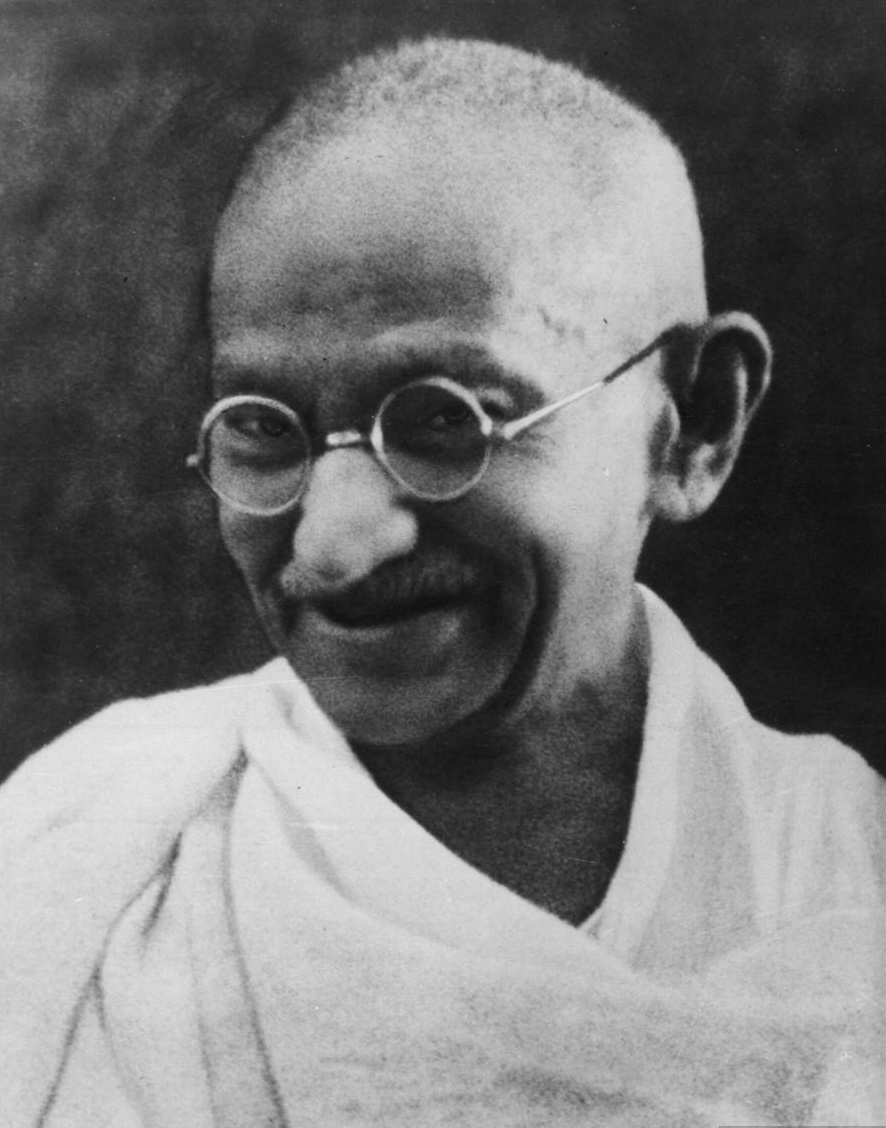
The first war of independence was in 1857, and it shook the foundation of the British East India Company.  India continues it's protests for autonomy and in the early 1900's Mahatma Ghandi leads non-violence as a campaign to gain independence.  On August 15, 1947 India gains their independence, and all that is left of the British are the tea gardens.


Wednesday, 28 August 2013

The Tastes of India

This week in the Tea Sommelier course we are tasting the teas from India.  Below is a snapshot of the 5 teas that we tasted.  The teas include:  starting at the lightest coloured liquor:  White tea from Darjeeling, 1st flush Darjeeling black, 2nd flush Darjeeling black, Assam Orthodox black and Nilgiri black.


Darjeeling Teas:

The area of Darjeeling is bordered by Nepal, Bhutan and Bangladesh.  The dry leaf is a mix of colours from dark brown to green, which indicates a mixed level of oxidization.  The tea season is typically from April to October and they have 4 picking times:

          First Flush               March to April
          Second Flush          May to June
          Monsoon Season    July to September
          Autumnal Flush      September to October

First flush teas are considered to be some of the most prized teas.  They are light and delicate with a slight muscatel (astringent) character.  I'm not sure if you can tell in the photo above, but the first flush tea is slightly lighter in colour than the second flush.  In my tasting the aroma of the liquor is like sweet fresh honey.  It was smooth for a black tea, and only the tiniest bit of astringency.  It has a creamy almost buttery finish to it.

Second flush teas are more full bodied, and have a heavier muscatel tone to it.  Leaf is generally more oxidized - so the dry leaf would still be a mixed bag of colour, but leaning more towards the brown.  In my tasting I noted that the aroma of the liquor was similar to first flush, but deeper and less 'fresh'.  The flavour was similar, but more full bodied and stronger.

The monsoon teas and Autumnal teas we did not try but they are even more oxidized, with a less complex flavour and darker liquor.  The variety of plant grown in Darjeeling are various hybrids between the indigenous Chinese plant sinensis sinensis and the indigenous Indian plant sinensis assamica.

The Darjeeling area has also started to manufacture other teas such as green, oolong and white.  We tried the white in the course and it was good.  It was the silver tip needle type and was light and sweet in aroma.  The colour of the liquor was similar, a light straw hue, but the flavour has a bit more body and a slight nuttiness to it that sets it apart from the Chinese Fujian white silver needle.  On inspection of the dry leaf, I noted that while similar in shape, the Fujian silver needle was lighter in colour, significantly larger and more 'hairy' than the Darjeeling white.  In this photo the first teas is the Fujian, and the second tea is the Darjeeling.  Upon further inquiry, it is simply how and when the leaf was picked and processed.


Assam Teas:

Assam is bordered by Bhutan and Bangladesh.  It is the worlds largest tea growing area.  It has a tropical climate and is near sea level.  Assam teas are know for body, briskness and strong malty flavours.  It is the main tea used in what we know as blended breakfast teas.  First flush teas are not prized like in Darjeeling since, they don't have the dark colour and complex malt flavour of the Assam that is known all over the world.  It is the second flush that is much more sought after.  While Darjeeling teas are primarily Orthodox teas, Assam is know for both Orthodox and CTC, since so much of their tea makes it into tea bags.  This tea is mostly grown at sea level, as opposed to Darjeeling which is in the foothills of the Himalaya.  The variety of plant grown here is Assamica.

In our sampling we tasted an Orthodox tea.  These are fully oxidized leaves and the dry leaf is very dark in colour, but mixed with some lighter tips.  The liquor as you can see in the photo above is also very dark.  This translates into a very full bodied cup of tea.  The tea has a very complex flavour of malt and caramel.  I really enjoy all that sweetness!!

Nilgiri Teas:

Nilgiri is located at the southernmost point in India on the west side.  Far away from Darjeeling and Assam.  It has year round growing conditions and at elevations of 1,000 to 2,000 meters and is picked year round.  The best teas are plucked in the months from December to March.  It is the second largest tea producing area in India after Assam.  The variety of tea plant here is the Assamica.

In our sampling it was noted that there was nothing really complex or singularly outstanding on this tea, however it has a nice mellow sweet flavour that would be good for blending, or if you don't particularly like astringency or extreme sweetness.  I thought it was good. 

My pick is of course the sweetest of the lot - Assam.  It was definitely easier to tell the differences between the teas from India than the teas from Sri Lanka.  However, I did use Angel Chen's suggestion to brew the black teas at a slightly lower temperature than boiling, so that likely helped.  Thank-you Angel!!

Tuesday, 27 August 2013

The Oneness of Tea

Tea is one of the most consumed beverages in the world, outside of plain water, and has been around as a beverage for almost 5000 years!!  It's no accident that tea is associated with equality, compassion, intention and community.  We need only to examine the history of tea and how it arose in China and Japan, and the influence that the Zen Buddhist monks had on its popularity.

Let's examine these influences by reviewing the Japanese tea ceremony and the concepts of Wabi and Ichigo Ichie.  Together these two concepts suggest that one should make the best of their surroundings and experiences in life to optimize ones encounters and feelings of well being - not just for oneself, but for others as well.  Thereby creating a community of compassion towards oneself and also towards others.

The concept of everyone being equal is prevalent in the actual tea ceremony itself.  Firstly when the entrance way into a tea room is constructed, the entrance way is made smaller than the size of a person, so everyone MUST enter the room in a bowed position.  It is also noticed in the actual pouring of the tea where the tea is generally first dispersed into a large serving jug and then poured into the actual drinking cups, so that everyone gets tea that is brewed exactly the same as opposed to the first pour perhaps being somewhat weaker than the last pour if the cups are served directly from the brewing pot.

The tea ceremony in itself is an exercise of intention.  Every motion, every step along the way is paid the attention it deserves.  The appreciation in what is happening, in brewing the perfect cup of tea is the outcome of being present in the moment.

Now let's fast forward to 2013, and a woman that has only just been introduced to these concepts.  How does she interpret the oneness of tea in this modern era?

We use tea symbolically to offer compassion to one another in times of need.  We share our hopes and dreams over a cup of tea with friends.  We have laughed and we have cried.  We have revered beauty, and shared our differences and similarities.

It is because of all these qualities that tea has the ability to break down barriers to communication and perceived inequalities.  Tea brings people together to share their thoughts and be respectful with each other.  Tea inspires us to be better people.

There are many different kinds of teas, all unique and special in their own way.  As are human beings.  And like the tea we drink we celebrate the differences that make each of us unique and special.

This is what tea means to me. Tea opens up possibilities to a better world, we just have to follow the same principles that make tea as loved as it is.  Tea creates community, and a oneness with each other.  We are all one, we are all equal and just as tea comes from only one plant the camellia sinensis so do we all come from one species the homo sapiens.

Tea is intentional.  Tea is community.  Tea is good.